Beijing Shan Hu International Technology Co., Ltd. company profile
Products Details
Home > Products >
Red/Green Monocrystalline PERC Solar Roof Tile - 48W Single Panel, 142W/m², Colorful Architectural PV, Class A Fire Rating
  • Red/Green Monocrystalline PERC Solar Roof Tile - 48W Single Panel, 142W/m², Colorful Architectural PV, Class A Fire Rating
  • Red/Green Monocrystalline PERC Solar Roof Tile - 48W Single Panel, 142W/m², Colorful Architectural PV, Class A Fire Rating
  • Red/Green Monocrystalline PERC Solar Roof Tile - 48W Single Panel, 142W/m², Colorful Architectural PV, Class A Fire Rating
  • Red/Green Monocrystalline PERC Solar Roof Tile - 48W Single Panel, 142W/m², Colorful Architectural PV, Class A Fire Rating
  • Red/Green Monocrystalline PERC Solar Roof Tile - 48W Single Panel, 142W/m², Colorful Architectural PV, Class A Fire Rating
  • Red/Green Monocrystalline PERC Solar Roof Tile - 48W Single Panel, 142W/m², Colorful Architectural PV, Class A Fire Rating

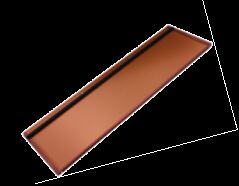
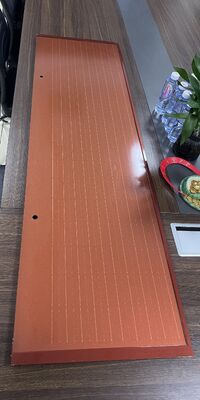
Red/Green Monocrystalline PERC Solar Roof Tile - 48W Single Panel, 142W/m², Colorful Architectural PV, Class A Fire Rating

Product Classification: Colorful Styles
Maximum Power (Single Product): 48 W
Short Circuit Current (Isc): 8.93 A
Color: Red / Green
Dimensions (L × W × H): 935 × 433 × 21 (±2) Mm
Weight (Single Product): 5.9 (±0.5) Kg
Highlight:

60W Solar Tile

,

Monocrystalline PERC BIPV Solar Tile

,

IP67 Rated Roof-Integrated PV Panel

Download

Product Details

Brand Name:
sangsolar
Model Number:
PVT-C48
Minimum Order Quantity:
Pallet
Price:
Negotiated
Packaging Details:
Carton on Pallet
Delivery Time:
10-30days
Payment Terms:
L/C,T/T,Alibabashop
Supply Ability:
2GW/Year
Highlight: 

60W Solar Tile

,

Monocrystalline PERC BIPV Solar Tile

,

IP67 Rated Roof-Integrated PV Panel

Product Description

Red/Green Monocrystalline PERC Solar Roof Tile – Architectural Color PV for Aesthetic Integration

Introducing our Colorful Solar Roof Tile – the perfect blend of renewable energy technology and architectural design. Available in vibrant Red and Green finishes, this 48W monocrystalline PERC solar tile delivers 142W per square meter while maintaining exceptional aesthetic appeal. Designed for projects where visual integration is as important as energy production, this tile features the same durable semi-tempered glass construction, aluminum alloy frame, and Class A fire rating as our standard models, but with the added benefit of color options that complement traditional or contemporary building designs. Whether you're working on historic renovations, residential communities with strict aesthetic guidelines, or commercial projects seeking distinctive green building solutions, this solar tile provides reliable power generation without compromising on style.

Key Features & Benefits

  • Architectural Colors: Available in Red and Green finishes that blend with various roof materials and architectural styles.

  • High Efficiency Performance: 48W per tile and 142W per m² output using premium monocrystalline PERC technology.

  • Durable Construction: Double-layer semi-tempered glass and aluminum alloy frame ensure long-term reliability.

  • Safety Certified: Class A fire rating and Application Class A for safe building integration.

  • Weather Resistant: Withstands extreme temperatures (-40℃ to +85℃) and hailstones up to 25mm diameter.

  • Easy Installation: Pre-installed IP67 junction box with 4mm² cables and MCA-compatible connectors.

  • Long-Term Warranty: 25-year linear power output guarantee for peace of mind.

Technical Specifications


Parameter Value
Max Power per Tile 48W
Max Power per m² 142W/m²
Open Circuit Voltage (Voc) 6.8V
Short Circuit Current (Isc) 8.93A
Color Options Red / Green
Dimensions 935 × 433 × 21 mm
Weight per Tile 5.9 kg
Cell Technology Monocrystalline PERC
Frame Aluminum Alloy
Glass Type Semi-Tempered
Operating Temperature -40℃ to +85℃
Hail Resistance 25mm at 23m/s
Fire Rating Class A
IP Rating (J-Box) IP67
Warranty 25 Years Linear Power Output

How It Works

Our colorful solar tiles utilize advanced monocrystalline PERC cell technology with specially treated glass surfaces that maintain the colored appearance while allowing optimal light transmission. The colored finish is integrated into the glass laminate during manufacturing, ensuring colorfastness and durability without significantly impacting efficiency. When sunlight passes through the colored glass layer, it reaches the high-efficiency PERC cells beneath, where photons are converted into electrical energy. This innovative approach allows architects and builders to specify solar tiles that match or complement roofing materials while still generating clean electricity at 142W per square meter.


Application Scenarios

This colorful solar tile is ideal for:

  • Architectural Projects: Where building aesthetics and color matching are primary considerations.

  • Historic Building Renovations: Allows integration of solar technology while maintaining traditional appearance.

  • Residential Communities: With homeowners' association guidelines requiring specific color schemes.

  • Commercial Buildings: Seeking LEED or other green building certifications with design requirements.

  • Educational & Government Facilities: Where visual appeal and sustainability messaging are important.

  • Tourism & Hospitality: Resorts and hotels wanting distinctive, environmentally-friendly roofing.

Red/Green Monocrystalline PERC Solar Roof Tile - 48W Single Panel, 142W/m², Colorful Architectural PV, Class A Fire Rating 0

Red/Green Monocrystalline PERC Solar Roof Tile - 48W Single Panel, 142W/m², Colorful Architectural PV, Class A Fire Rating 1

Red/Green Monocrystalline PERC Solar Roof Tile - 48W Single Panel, 142W/m², Colorful Architectural PV, Class A Fire Rating 2

Red/Green Monocrystalline PERC Solar Roof Tile - 48W Single Panel, 142W/m², Colorful Architectural PV, Class A Fire Rating 3


Why Choose Our Colorful Solar Tile?

  • Design Flexibility: Red and Green options provide creative freedom for architects and builders.

  • Proven Performance: Same reliable PERC technology as standard tiles, with slightly adjusted efficiency for color integration.

  • Durability: Colors are integrated into the glass laminate, resisting fading and weathering.

  • Safety Compliance: Meets the same rigorous fire and electrical safety standards as conventional solar tiles.

  • Sustainable Choice: Combines renewable energy generation with architectural preservation.


Frequently Asked Questions (FAQ)

Q: How much efficiency is sacrificed for the color options?
A: The colorful versions maintain excellent performance at 142W/m² compared to 178W/m² for standard black tiles, representing a well-balanced trade-off for architectural integration.

Q: Are the colors fade-resistant?
A: Yes, the colors are integrated into the glass laminate during manufacturing and are tested for UV resistance and color stability.

Q: Can I mix colored and standard tiles on the same roof?
A: Absolutely. The tiles have identical dimensions and electrical characteristics, allowing for creative pattern designs or accent areas.

Q: What maintenance do colored tiles require?
A: Similar to standard tiles – occasional cleaning with water to remove dust and debris. The colored surface doesn't require special care.

Q: Are these suitable for all climate conditions?
A: Yes, they have the same temperature range (-40℃ to +85℃) and hail resistance as standard tiles, making them suitable for diverse environments.


Important Notes

  • Consult with architectural professionals when planning colored solar tile installations to ensure optimal visual and energy performance.

  • Consider roof orientation and potential shading effects, as with any solar installation.

  • Ensure proper installation by certified professionals to maintain warranty coverage.

  • Keep records of color batch numbers if ordering additional tiles for future expansion.

  • Always comply with local building codes and aesthetic guidelines when using colored solar tiles.


Product Diagram

Red/Green Monocrystalline PERC Solar Roof Tile - 48W Single Panel, 142W/m², Colorful Architectural PV, Class A Fire Rating 4


Installation Diagram

Red/Green Monocrystalline PERC Solar Roof Tile - 48W Single Panel, 142W/m², Colorful Architectural PV, Class A Fire Rating 5

SUCCESSFUL PROJECTS
Latest company solutions about Shandong Jianzhu University Photovoltaic Power Generation Sunroof

Shandong Jianzhu University Photovoltaic Power Generation Sunroof

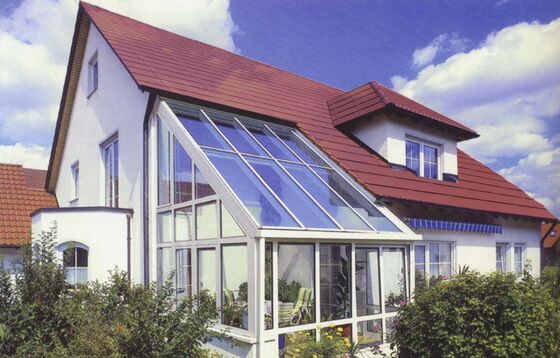
Project background Shandong Jianzhu University is located in Jinan, the capital city of Shandong Province, in the middle of the province. geographical location is between 36°02′~37°54′ north latitude and 116°21′~11°93′ east longitude. It has a warm temperate continental monsoon climate, with distinct four seasons and ample sunshine. The peak sunshine hours reach 4.27 hours/day, and the total available sunlight hours throughout the year reach 1231.25 hours. In terms of location, it very suitable for connecting to photovoltaic energy. Since the Industrial Revolution, with the excessive consumption of fossil energy, carbon emissions have pushed the conflict between humans and nature to the brink of danger. carbon emissions have led to global warming, frequent extreme weather events, and the destruction of ecosystems, leaving the Earth unable to bear the burden. Deep decarbonization urgently needed. Under the care and support of the school's leadership at all levels, and under the carbon neutrality blueprint, Shandong Jianzhu University has responded to the national call, and has taken concrete actions to practice the concept of green development. The university has chosen to install a photovoltaic power generation system infusing green energy into the campus, demonstrating the school's sense of responsibility and foresight in environmental protection. Project Overview This project uses a total of 71 solar panels, with a power generation capacity of 17.39KW, producing an average about 69 kWh per day, and approximately 25,000 kWh annually. Meanwhile, it can reduce the use of 9,00 kilograms of standard coal, 750 kilograms of sulfur dioxide, 23,000 kilograms of carbon dioxide, and 100 of nitrogen oxides. Not only is it environmentally friendly and energy-saving, but it also achieves good economic and social benefits. Project advantages 1.Economic benefits: The biggest advantage of photovoltaic solar roofs compared to ordinary sunrooms is that they can save electricity bills and recover investment costs sell   2.Thermal insulation: PV sunrooms not only possess the insulation function of ordinary sunrooms but also have heat insulation capabilities, ensuring that the indoor temperature does not become excessively high during summer.   3.Legal construction: Normal rooftop additions and extensions belong to illegalbuildings, but photovoltaic sunrooms are reasonable and legal.     4.Long service life: The power generation function of BIPV products is guaranteed for up to 30 years, which is longer than that of materials, making it more widely applicable.   Project status      
Latest company solutions about Solar Farm Renewable Energy Solutions

Solar Farm Renewable Energy Solutions

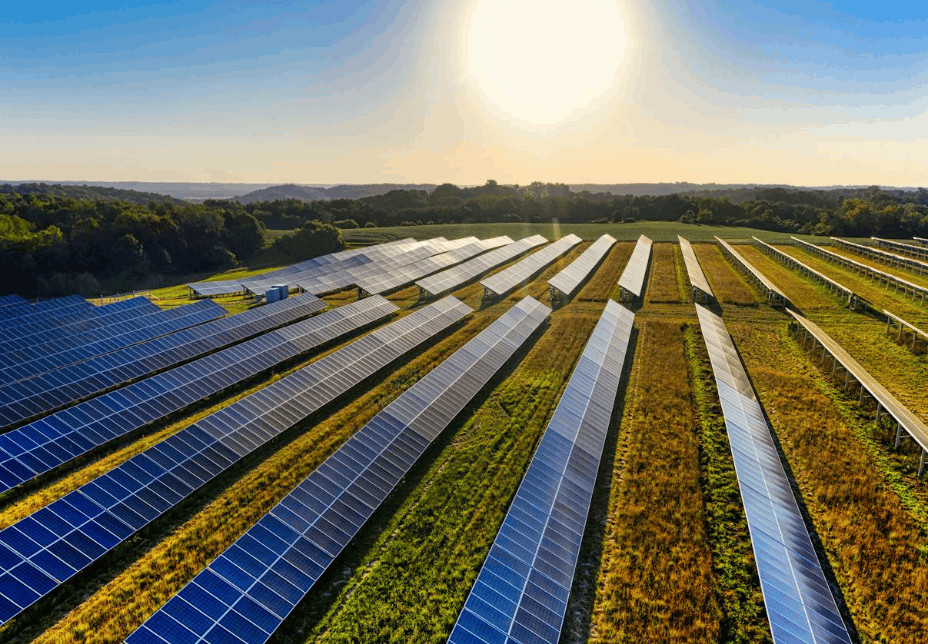
Discover new ways of generating and storing energy. What are solar farms? Solar panel farms are large-scale installations of photovoltaic (PV) panels that generate electricity from sunlight. These farms can range in size from a few acres to hundreds of acres and are typically situated in rural areas where there’s ample sunlight and land availability. In the worldwide, solar farms are becoming an increasingly popular way to generate clean and renewable energy - for powering your business and selling back to the grid.   What are the benefits of solar farms? As well as providing clean, sustainable energy, solar power farms also offer a range of other benefits. They can help to reduce greenhouse gas emissions and combat climate change, and also provide opportunities for local employment, as solar farms require maintenance and monitoring. There are a few concerns raised about their impact on biodiversity and the loss of agricultural land, so in response to this, more and more countries has introduced guidelines for solar farms, which require developers to carry out environmental impact assessments and to consider the impact on local communities.   How much do solar farms cost? The cost of building a commercial solar panel farm can vary depending on the size of the installation, the location, and the quality of the PV panels used. However, according to industry experts, the average cost of building a solar farm is around €1 million per megawatt (MW) of capacity. This means that a 50MW solar farm, which is a fairly typical size in the EU, would cost around €50 million to build. Despite the initial high cost, solar farms are considered a sound investment due to the potential long-term savings on energy costs, and the opportunity to generate revenue from the sale of excess energy back to the National Grid. Solar farms in the EU usually have a lifespan of around 25 years and can generate enough electricity to power thousands of home and businesses.  
Latest company solutions about In the intricacies of healthcare and medical systems, the importance of reliable electronic components

In the intricacies of healthcare and medical systems, the importance of reliable electronic components

​   A network core switch is an essential component of a network, typically located in the backbone or central area. It is responsible for high-capacity data transfer and plays a critical role in ensuring the smooth operation of the network. Acting as a gateway to the Wide Area Network (WAN) or the Internet, the fiber core switch facilitates connections to servers, Internet Service Providers (ISPs) through routers, and the aggregation of all other switches. To effectively handle the traffic directed to it, a core layer switch must have significant power and capacity, making it essential to be a fast, full-featured managed switch.   How Does Core Switches Work? The following sections describe how the network core switches operate in a network environment.   Network Traffic Aggregation Network core switches perform the crucial duty of aggregating network traffic from various sources, consolidating and managing it efficiently.   High-Speed Data Forwarding Core layer switches are responsible for processing and forwarding data packets rapidly and efficiently, utilizing advanced switching technologies.   Interconnectivity A core switch establishes connections between different segments and subnets within a network, enabling seamless communication and data transfer.   The aforementioned points highlight the benefits of employing a network core switch. In the event of a network failure, this equipment guarantees the reliability and integrity of data transmission by facilitating two-way data flow and enabling network self-healing. The core switch exhibits robust scalability, supporting multiple interfaces and facilitating bus network implementation. Moreover, it features an internal automatic alarm function that promptly notifies relevant personnel of any failures, ensuring timely maintenance. This convenience allows for efficient remote management and maintenance.